Understanding Learners and Supporting Participation
A collection of fact sheets covering learning differences, disabilities, health conditions, and other topics relevant to inclusive education. Each resource provides an overview, characteristics staff may notice, and practical support strategies.
Use them as a reference for staff discussions and planning, alongside what you know about each learner’s strengths, needs, and preferences.
Topics Covered
The collection includes fact sheets on:
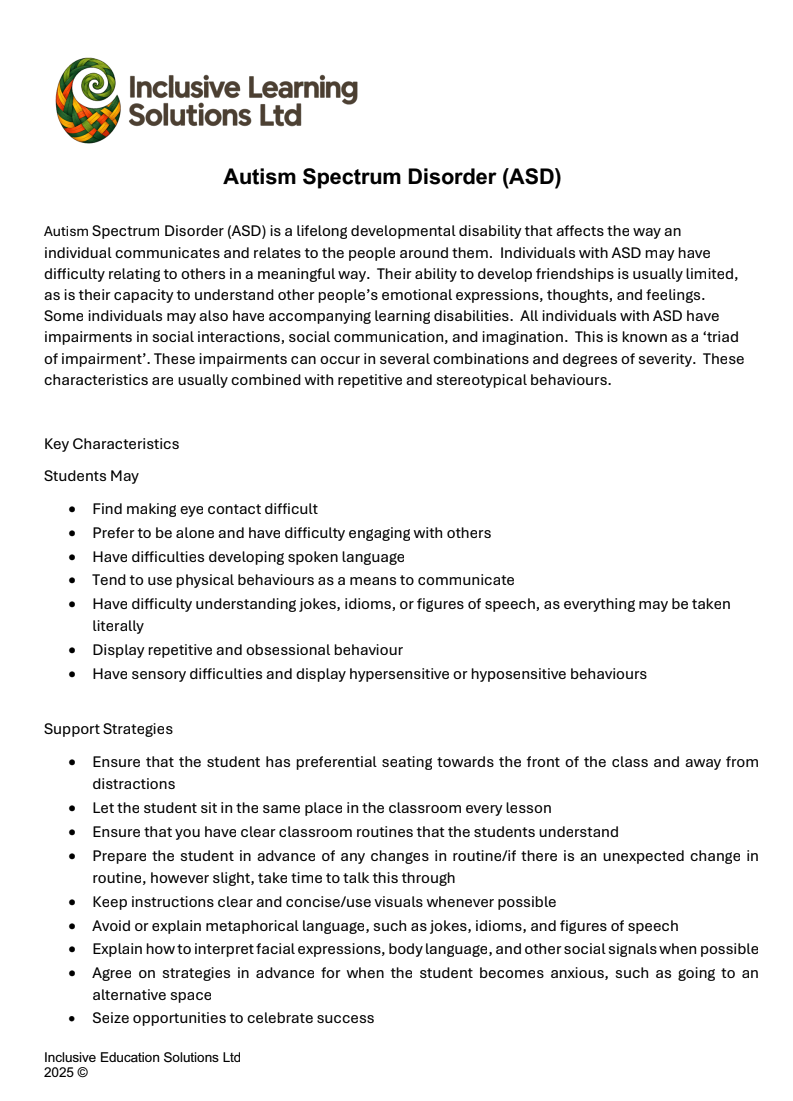
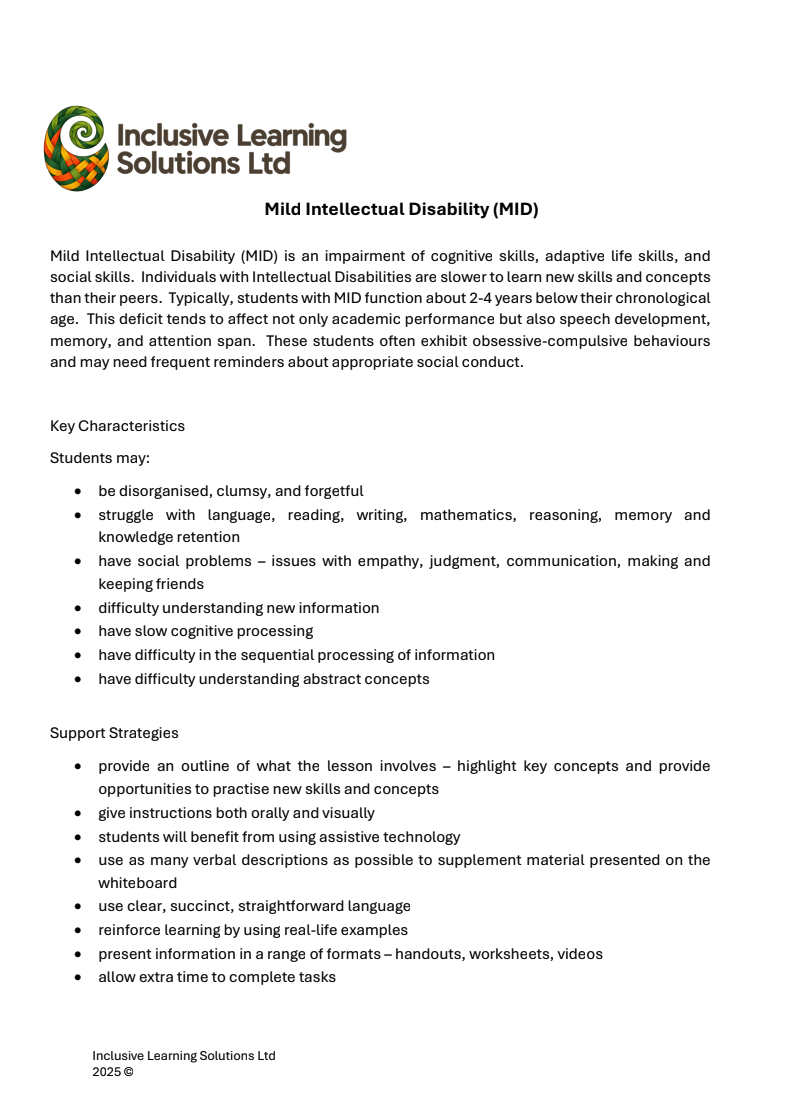
Learning and development: ADHD, autism, dyslexia, dysgraphia, dyscalculia, dyspraxia and learning delays.
Emotional wellbeing and communication: anxiety, selective mutism, attachment difficulties and speech and language needs.
Physical and health conditions: cerebral palsy, epilepsy, diabetes, cystic fibrosis and spina bifida.
Sensory needs: hearing differences, visual impairment and auditory processing.
Genetic conditions: Down syndrome, Fragile X syndrome and a range of chromosome deletion syndromes.
Identity and inclusion: gender diversity and supporting non-binary learners.
Using the Fact Sheets
Use the fact sheets during staff induction, team discussions, and planning for individual learners. They provide a starting point for considering classroom adjustments, communication approaches, and support strategies.
Work with the learner and whānau to identify which approaches suit them, then review and adjust support as their needs change.
Ideal For
Teachers and Learning Support Assistants
Learning Support Coordinators and SENCOs
Pastoral and school leadership teams
Staff leading induction and professional learning